
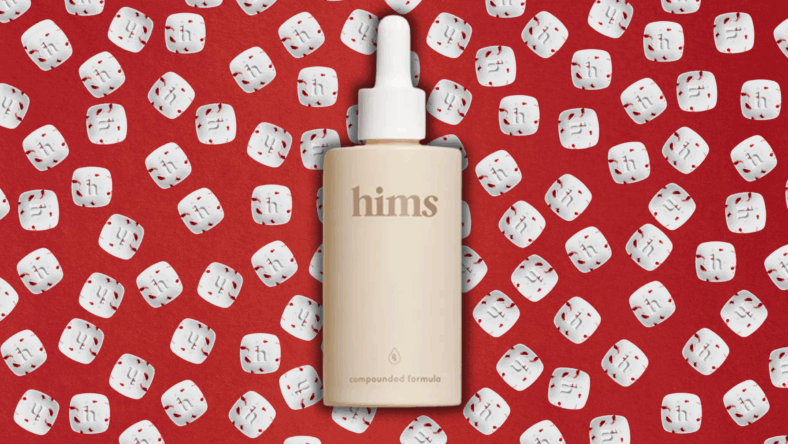
A while back, I gave a GQ Grooming Award to a hair loss treatment that, in my studied opinion, is one of the best formulas you can use to bolster regrowth and retention. (I’ve been covering the men’s grooming industry for over a decade by the way, mostly at GQ.)
However, that product—the once-a-day Hims’ topical Rx Hair Loss Spray—is not FDA approved, nor will it ever be. Recently, media coverage has zeroed in on this lack of FDA approval, treating it like a red flag and casting doubt on the legitimacy (and even the safety) of these compounded formulas.
And yet, I stand by my endorsement of that Hims compound, as well as other compounds from reputable brands like Happy Head and Ro. These are ingredients with a proven track record, and a rare instance where “not FDA-approved” doesn’t raise that red flag for me.
Article Disclaimer: Please be aware of your own health factors through regular medical checkups, and match that against any potential hair loss or sexual health treatments. Your health is in your own hands; I can only provide general advice here, but you should speak with a doctor about how it applies to you, as well as the results you can expect for hair retention or regrowth.
For proof on these ingredients, consider the three key players in Hims’ compound (hybrid) formula:
- Minoxidil 6%: Proven in decades of clinical use to reactivate dormant hair, significantly increasing density in about 40% of users within 6 months. Works by improving blood flow and nutrient delivery to follicles, and optimizing hair growth/dormancy cycles. Generic of Rogaine; on its own, topical minoxidil is available over the counter under 5%.
- Finasteride 0.3%: Works by blocking the conversion of testosterone to DHT—a hormone that causes follicles to shrink and shed hair. Studies show topical finasteride can match oral results, but with fewer long-term (name sexual or depressive) side effects. Oral version is generic of Propecia; finasteride is only available via prescription, whether oral or topical.
- Ketoconazole 2%: An antifungal ingredient (common in dandruff shampoos) that also calms inflammation and creates a healthier scalp environment for hair to grow. Trials show it can thicken hair and support better results when combined with other treatments.
In this case, the ketoconazole is more of a bonus ingredient, with a proven track record for benefits. But for the rest of this article, I will primarily focus on minoxidil and finasteride. Its addition earned Hims the award here; the act of compounding isn’t what’s new; it’s the added innovation from brands like Hims that earns my accolades.
Just remember, the patented + FDA-approved version of the two core hair loss treatments are: oral finasteride (Propecia) and topical minoxidil (Rogaine). We also have oral minoxidil and topical finasteride, but neither of those is FDA-approved for hair loss/growth/retention either, despite clinical proof.
“Finasteride and minoxidil work synergistically to help with hair growth, and there’s a lot of research indicating that a combined treatment is safe and may be more effective than one alone,” says Dr. Knox Beasley, a dermatologist and medical advisor for Hims. Yes, Beasley is a spokesperson for the brand, but his professional stance aligns with the core offering here: “In my practice, I recommend using the combo of [these two treatments] to my patients whenever possible, and the flexibility of having access to both oral and topical compounded options allows for personalized solutions for each individual.”
Why It’s Not FDA Approved—And Never Will Be
Normally, it’s a big red flag when a cosmetic product “not FDA approved”. I want the assurance that something is safe for me while offering the benefits it promises. I would never buy a product from a maker who hasn’t cleared the necessary hurdles to sell in the marketplace. We need these regulations.
But here’s where we add a sprinkle of nuance to my usual stance, and why I don’t view “non FDA-approved hair loss prescriptions” as negative.
1. FDA Approval is a Nonstarter for Compounds:
The process to approve a new drug formula is long and expensive. Since these ingredients (minoxidil and finasteride) are already generic and can’t be patented, no brand will spend millions to formally approve a combination that competitors could duplicate overnight. But remember: The core ingredients already have FDA approval in other forms. The only thing missing is paperwork on the blend, not the proof that it works. This is a rare case where “unapproved” doesn’t also mean untrustworthy.
2. Regulated, But Not “Approved”:
The facilities and pharmacies behind these compounds/hybrids are themselves FDA-regulated, and each individual ingredient meets strict standards. But when mixed as a customized prescription, the combo itself isn’t submitted for approval—just medical oversight.
Perhaps this helps clarify, too: These prescriptions are filled by partner pharmacies that follow current Good Manufacturing Practices (cGMP) and routine audits, so each batch is made to FDA-regulated quality and safety standards.
3. What Is FDA Approved (and What’s Not):
Approved: Topical minoxidil (up to 5%) is FDA-approved as an over-the-counter solution, and oral finasteride is FDA-approved by prescription for hair loss.
Not Approved: Topical finasteride and oral minoxidil—both are widely used “off-label” because research and clinical experience show they can deliver great results with (often) fewer side effects than their original FDA-approved forms.
4. Gold-Standard, Not Red-Flag:
Despite lacking the FDA’s formal stamp, both oral minoxidil and topical finasteride are “gold standard” options in today’s dermatology playbook—embraced for their safety, flexibility, and results. Oral minoxidil can help many patients who don’t respond to topical minoxidil, and can offer a level of regrowth that often surpasses what’s possible with over-the-counter options. Meanwhile topical finasteride is embraced as a safer alternative to the pill, reducing the risk of unwanted side effects.
But remember, “gold standard” still doesn’t mean “it works for everyone”, nor that “everyone can take it without risk”. You still need to understand risks regarding these products before taking them. My articles on minoxidil and finasteride should be of help—but make sure you speak with the doctor who prescribes these treatments to discuss those risks and to build a monitoring plan.
To that note, Dr. Beasely adds that there is no one-size-fits-all approach. And these compounds are what allow for customization. “Everyone’s situation is different, which is why recommendations are personalized and grounded in each individual’s specific medical history and needs,” he says. “In each case, the decision is a careful one made in close consultation with the patient that takes every aspect of their health picture into account.”
The New Landscape of Prescription Compounds
So, while FDA-approved name-brand solutions offer clear hair growth benefits, I have a few more arguments in favor of compounds.
- Access: Telehealth platforms and compounding pharmacies make advanced hair-loss prescriptions more available than ever. There’s no need to see a specialist in person, and you have way more options available to you than any clinic. The responsibility is on YOU to report any issues that come up, should you experience side effects. Make sure you are aware of risks as well as how each treatment works; monitor your progress and keep your telehealth provider up to speed, so intervention can be made if necessary. (The odds favor success, but stay aware.)
- Customization & Choice: With oral and topical options, as well as different formulas available, compounds and hybrids fits their specific hair needs and goals. Compounding allows for lower or topical doses when appropriate.
- Streamlined Regimens: With hybrids, it’s typically a one-and-done daily application or pill. No more double applications of topical minoxidil, or applying/ingesting two different types of treatments. So it’s minimalist approach, maximum gains type of approach.
Other Hair Retention Compounds to Consider
While Hims’ hybrid topical spray is a standout in the category, it is not their only compound option. They also offer oral compounds, such as a custom pill that combines low-dose finasteride with other ingredients; sometimes they even add tadalafil (the active ingredient in Cialis) to address both hair loss and erectile dysfunction in one daily dose.
“I’ve seen firsthand how these compounded solutions help men manage multiple health issues at once,” says Dr. Pete Stahl, Head of Sexual Health at Hims. “Multi-condition hair loss + ED solutions have been impactful for many men, especially considering how common it is for men to experience overlapping health concerns like ED and male-pattern baldness. (Hims reports that erectile dysfunction affects 40% of men by age 40, and male-pattern hair loss 50% by age 50.) “Integrating them into a personalized treatment plan can help meet men where they are,” says Stahl. “And with more tailored treatments designed for where they’re going.”
Hims isn’t the only player in this hybridding space, either.
- Ro (fka Roman) offers a well-reviewed topical solution that combines minoxidil with tretinoin (that ingredient, familiar in anti-aging prescription skincare, helps boost absorption and may improve regrowth). This was also a favorite product of mine from 2024.
- Happy Head stands out for their ultra-customizable formulas. Patients can adjust concentrations of minoxidil and finasteride, add tretinoin, ketoconazole, or even spironolactone, and choose between topical or oral delivery. Their approach is all about flexibility and building the “just right” mix for each user.
Be an Active Participant in Your Hair Retention Efforts
When it comes to hair loss, or any aspect of your health, being passive just isn’t an option, even if it feels purely cosmetic. Compounded prescriptions are a terrific solution, but they’re not one size fits all. You need to understand how these formulas work, weigh the risks and benefits of oral versus topical options (for both finasteride and minoxidil) and decide if a customized approach actually suits your needs.
“It’s all about tailoring treatment to the individual,” says Stahl. “That means deeply understanding their unique needs and health profile: their current clinical presentation, any underlying health conditions or medications they’re taking, lifestyle, and goals. The clinical framework used by the providers on the platform incorporates the latest evidence-based guidelines and rigorous safety standards, all to ensure customers are provided personalized, safe, and effective care.”
With Hims and its core competitors, every prescription is reviewed by a licensed provider with your health history in mind, and patients have ongoing support if side effects or questions come up. I know that Hims also maintains formal adverse-event reporting and detailed patient records, which adds a layer of oversight that many clinics do not match.
Don’t mistake this as a blanket endorsement of non-FDA approved products, either. Remember, the facilities making these products are FDA regulated, and there are expert chemists and doctors behind each formula.
Be especially cautious of name-brand companies insisting their once patented option is still the gold standard. The science has evolved, and compounded formulas are proof. They offer better options, more flexibility, and real results for those who do their homework.