
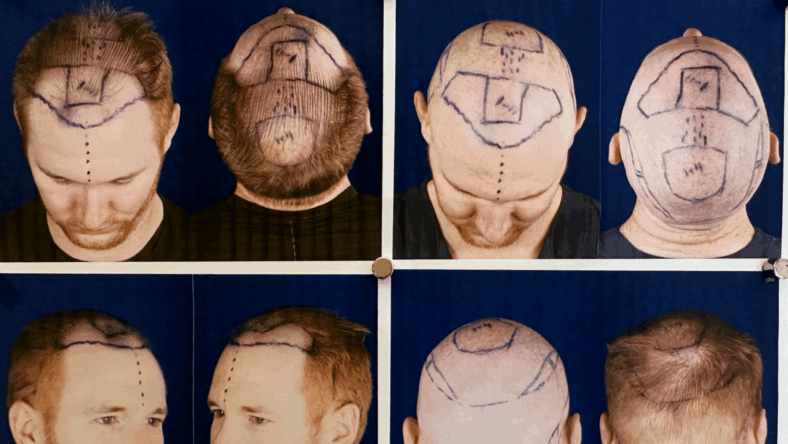
He’s wrong, for what it’s worth.
When Graham Norton and his co-host Maria McErlane were chatting about celebrity hairlines on Wagging On, they landed on Wayne Rooney as an example of how fickle hair transplants can be. “They fall out,” Maria insisted. “They never stay.”
It’s a common misconception, and one that’s technically half-true. Here’s the clip, and my response. I’ll elaborate below, too.
Are Hair Transplants Permanent?
Hair transplants don’t “fall out” in the way people think. Modern transplants move healthy follicles from the back and sides of your scalp (where hair growth is genetically resistant to DHT, the hormone responsible for male pattern baldness) to thinning or bald areas on top. Those donor follicles keep their resistance wherever they’re implanted. In theory, they’re permanent, because those hairs are not genetically predisposed to falling out. They weren’t going to fall out from the sides and back, and they aren’t going to fall out now that you’ve moved them elsewhere.
So why do some guys (like Wayne Rooney) seem to thin again after a few years of the hair transplant?
Usually it’s because they only addressed part of the problem. A transplant restores density in targeted areas, but it doesn’t stop ongoing hair loss elsewhere. The follicles that weren’t transplanted (your hairs that are “native to the top of your head”, meaning, the ones that have always been there) are still vulnerable to DHT and can keep falling out unless you use preventive treatments.
That’s likely what happened to Rooney. He famously documented his hair restoration in the early 2010s, but over time the native hairs around his grafts continued to recede. Without medical maintenance, transplanted zones can end up surrounded by new bald patches, creating the illusion that the transplant “fell out.”
How to Prepare for a Hair Transplant
If you’re thinking about getting a transplant, you should already be treating your hair loss medically before you book the surgery. Clinical solutions like topical or oral finasteride (which blocks DHT) and topical or oral minoxidil (which extends hair growth cycle + improves nutrient delivery) help preserve existing follicles and create the healthiest possible canvas for transplantation.
Just as importantly, those treatments should continue long after the procedure. A good surgeon will stress this: a hair transplant replaces what’s been lost, but medical therapy preserves what remains.
When done right by the best hair transplant clinic, and when maintained properly, a hair transplant is a lifetime investment. The grafted hairs will behave just like the ones they came from: if they were resistant before, they’ll stay that way. But the rest of your scalp still needs ongoing protection.
So Maria isn’t entirely wrong. Some hair transplants do seem to “fall out,” but it’s usually not the new follicles failing. It’s the old ones being ignored.
Remember, a hair transplant is not a cure, but a capstone to a consistent routine. Protect what you have, strengthen the canvas, and then fill in the gaps. That’s how you avoid needing another one, and how your new hair actually stays put.
Learn More: Istanbul Hair Transplant Procedure + Recovery
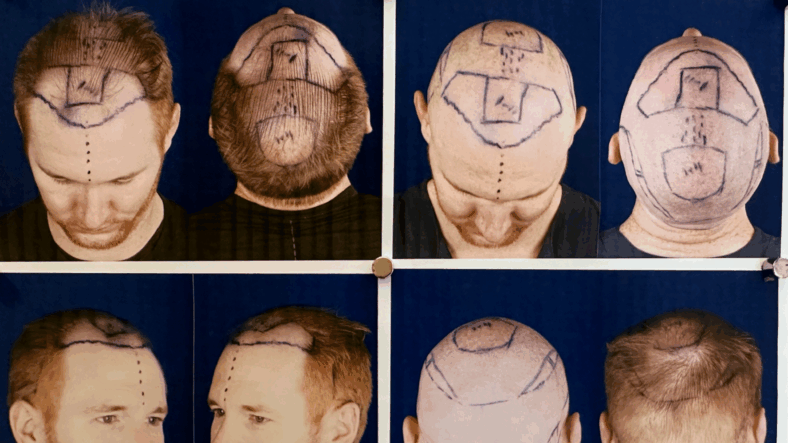
And while I have you, why not check out our hair transplant video series? We follow my friend Matt to Istanbul to track his hair transplant procedure, as well as his recovery and regrowth. And, check out the best hair loss solutions and the rules of hair retention to keep your strands locked in the first place.
WATCH: Hair Transplant Web Series
The Newsletter: Subscribe to Blue Print by Adam Hurly
The best grooming gadgets, new products, gift guides, and game-changing advice—all inside our free newsletter. (Plus occasional big-ticket giveaways, too!)
You may unsubscribe at any time. By signing up, you agree to the Terms and Conditions, Use Policy, as well as our Privacy and Cookie Policies. You also acknowledge our site Disclaimer.