
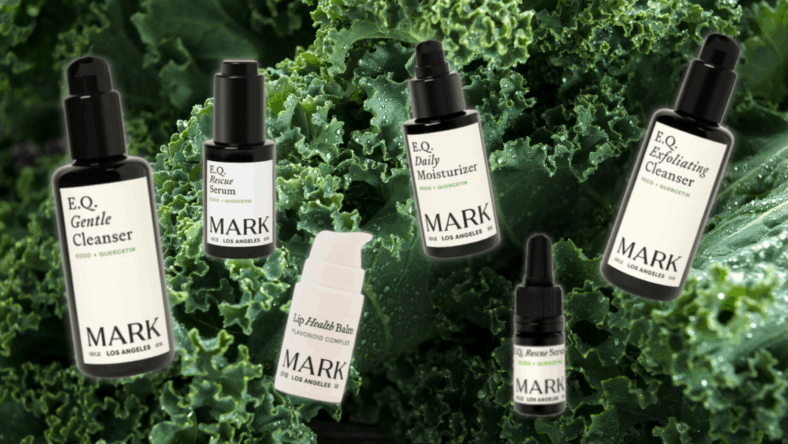
How MARK Los Angeles built a real flavonoid system instead of a label claim.
Most skincare brands can tell you they use “plant extracts.” Very few can tell you how much of the active compound is actually in those extracts, or whether any of it survives long enough to reach your skin. This is the gap that Mark Menning stepped into when he launched MARK Los Angeles. Before he created a consumer brand, Menning spent more than twenty years in pharmaceutical drug development. He worked on real delivery problems, and he handled compounds that were difficult to stabilize, dissolve, or move through biological barriers.
The hero ingredients in MARK are flavonoids, the natural defense molecules plants use to manage stress, UV, and pathogens. They offer antioxidant, anti inflammatory, and collagen preserving benefits. The science behind them is established, but the challenge is getting them delivered deep enough into the skin so that their benefits can be experienced.
Basically, on their own, flavonoids can’t get through skin’s outermost layer, into the lipid layers where they can have actual impact. While other brands would skirt things and simply market the ingredients’ presence, Menning knew that, as a scientist, he had to find an actual delivery system for these ingredients—and that he would need to do that research and testing himself. “If you rely on the ingredient manufacturers, you are shooting in the dark,” he tells me.
What Do Flavonoids Do in Skincare?
Flavonoids already show up in your daily diet in green tea, berries, herbs, citrus, and most leafy vegetables. This is part of why your body responds to them so naturally in skincare. They calm inflammatory signaling, help manage oxidative stress, and reduce activity from enzymes that break down collagen. This makes flavonoids ideal for everything from acne to sensitivity to photoaging. Menning explains it simply: “Inflammation is the common linker for all these skin conditions.”
He sees this connection across every group he works with. Teens managing breakouts. Adults dealing with reactive skin after stronger actives. People entering perimenopause or menopause where hormonal shifts create inflammation and texture changes. As he put it, “We focus on the source. Not the symptom. The inflammation is the thing you need to go after.”
Because the pathways are so central, flavonoids create visible change without relying on irritation or exfoliation. “You do not need to hammer the skin to get improvement. You need to modulate what is happening underneath.”
The Two Flavonoids That Power the MARK Los Angeles System
Not all flavonoids act the same way. MARK Los Angeles relies on two specific flavonoids because of the way they complement each other at both the surface and deeper inflammatory layers.
EGCG (epigallocatechin gallate)
EGCG is the main flavonoid in green tea. It is one of the most researched anti-inflammatory molecules in dermatology. It reduces redness, calms immune signaling in the skin, and interrupts the cascade that triggers acne flare ups. EGCG also helps regulate sebum in a gentle way, which is why it supports both congested and sensitive skin.
Most skincare that claims green tea benefits is not actually delivering EGCG, because green tea extracts vary widely in their flavonoid content. Again, this is what Menning means when he says brands are “shooting in the dark.”
MARK Los Angeles uses nearly pure EGCG, isolated from green tea in Taiwan. Menning emphasized, “They isolate this specific compound. It is 98 percent pure and they remove the caffeine from it.” That purity level guarantees a consistent dose and makes the molecule predictable when it hits the skin.
Quercetin
Quercetin is the second flavonoid in the system. It shows up naturally in onions, apples, and leafy vegetables. It reinforces the same inflammatory pathways as EGCG but also plays a direct role in collagen preservation. Quercetin slows down the enzymes that break apart collagen fibers and supports the integrity of the skin barrier.
Where EGCG is incredible for calming acne and redness, quercetin excels at barrier stability, firmness, and repair. It is also more lipid friendly, which allows it to integrate into the outer layers of the skin’s structure.
Because EGCG and quercetin act on different sides of the inflammation spectrum, the combination gives MARK’s formulas a wide reach. They help with immediate irritation at the surface while also influencing the deeper enzymatic and immune activity behind chronic redness, sensitivity, and textural decline.
The Newsletter: Subscribe to Blue Print by Adam Hurly
The best grooming gadgets, new products, gift guides, and game-changing advice—all inside our free newsletter. (Plus occasional big-ticket giveaways, too!)
You may unsubscribe at any time. By signing up, you agree to the Terms and Conditions, Use Policy, as well as our Privacy and Cookie Policies. You also acknowledge our site Disclaimer.
Why Most Products Fail to Deliver Flavonoids
The problem is not the ingredient. It is the delivery environment. EGCG and quercetin are both unstable, poorly soluble, and difficult to move through the skin barrier. Most standard formulas do not stabilize them well, and even fewer can deliver them past the stratum corneum.
Menning explains the industry’s blind spot. “People will use extracts, but the issue is how much EGCG is in there. We do not know. It could be 0.1 percent, 1 percent. That is why we pull out the pure form.”
He follows it with the larger problem. “They are relying on the ingredient supplier saying green tea is the next wave and so they use it. But they are not linking the whole story.”
Companies often start with a trend, then find an extract that lets them print the ingredient on the label. But they do not solve the chemistry that would allow the ingredient to work. As Menning puts it, “You should not check the box. You should fix the problem.”
The Delivery System That Changes Everything
Menning’s breakthrough came from solving the core problem that kept flavonoids from performing on skin: they’re water-soluble but the skin’s barrier isn’t. In their natural state, compounds like EGCG and quercetin simply can’t migrate through the lipid-rich layers to reach the dermis, where inflammation, immune signaling and collagen formation actually happen.
“You have to get it into the dermis to make an immune impact,” Menning says. “Otherwise you’re basically moisturizing with good intentions.”
The shift happened in his lab when he mixed his flavonoids with a specific oil phase he’d been developing. “It formed a clear solution, and I was expecting it to precipitate,” he recalls. “I increased the solubility a thousand-fold.” That discovery became XDF™, the brand’s patent-pending Transdermal Flavosomes™ delivery system. The technology keeps flavonoids dissolved, encapsulated, stable and bio-available, allowing them to travel through the stratum corneum instead of sitting on top of it.
“It creates this structure that’s stable and can deliver through the skin,” Menning says. “It’s making the ingredient behave like it does in the research.”
With this solved, Menning was ready to bring the concept to market, especially int he form of his skin-penetrating E.Q. Rescue Serum and Lip Rescue Serum.
What the Studies Showed
Menning tested his formulas with university labs, dermatology researchers, and real patients. The acne findings were significant. “Eighty six percent of the patients saw significant improvement after six weeks,” he says. “These were cystic acne patients.” Their baseline inflammation was high and persistent, making this one of the toughest groups to treat.
Another set of trials involved psoriasis and eczema. After using the EQ Serum, “it reduced their symptoms significantly.” He notes that dermatologists were surprised by the speed of response. “When you drop inflammatory signals quickly, the skin rebounds faster than people expect.”
The strongest proof came from the lip serum. This was tested on cold sore sufferers with frequent flare ups. “Ninety five percent said it worked better than Abreva. Twenty to thirty percent did not even develop a cold sore after feeling that initial tingling,” he says. “These are people who used to get them monthly, and are now six or seven months out, without a flare-up.”
He attributes the success to penetration speed. “You need to shut down the viral replication quickly. If you do not reach that layer fast enough, the lesion forms.”
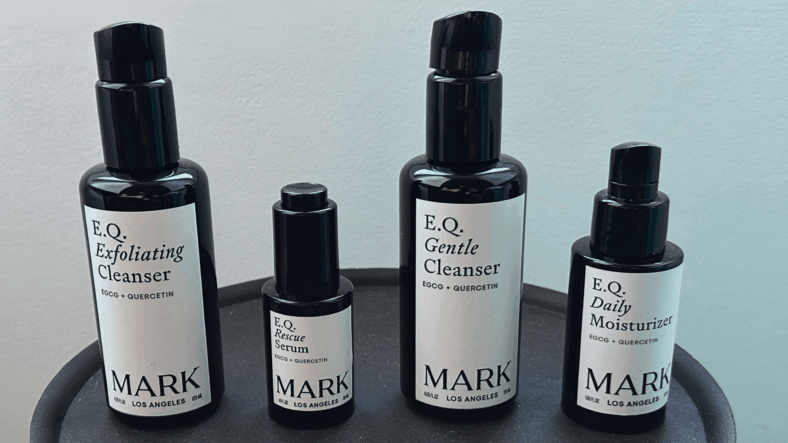
The MARK Los Angeles Lineup
Every product uses the same flavonoid delivery platform, but each one targets a different need.
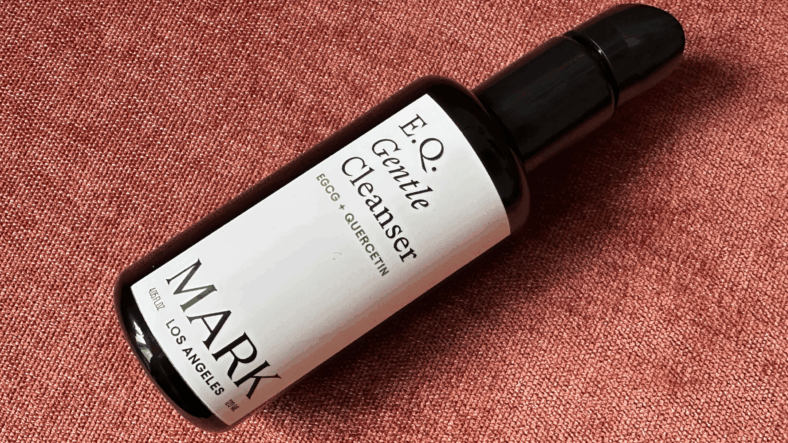
A soothing daily wash using EGCG, quercetin and squalane to calm inflammation, protect the barrier and cleanse without stripping.
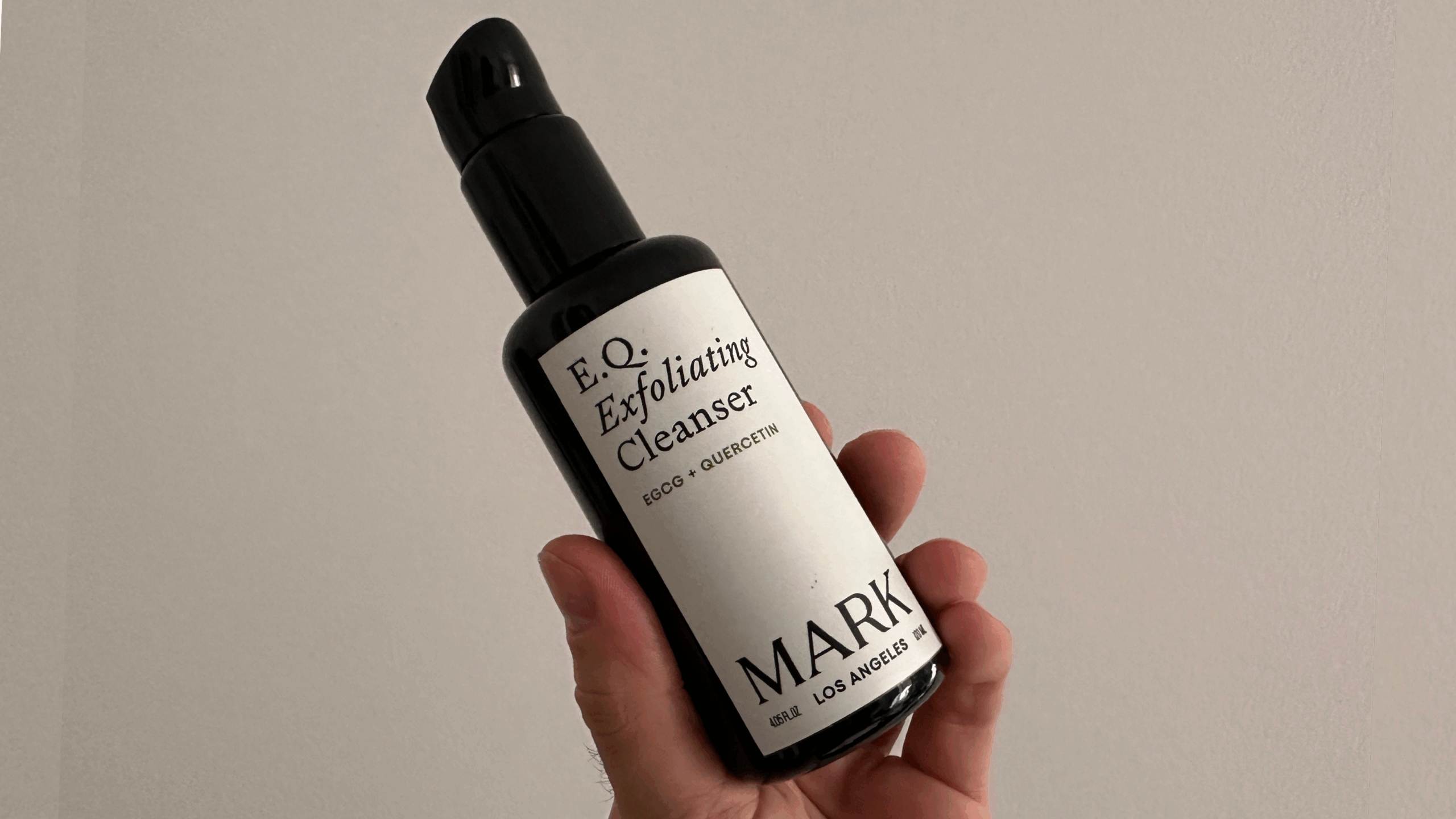
Designed for texture, ingrowns, and anyone needing a deeper clean without irritation. Fine walnut shell, EGCG and quercetin polish skin while preserving moisture.
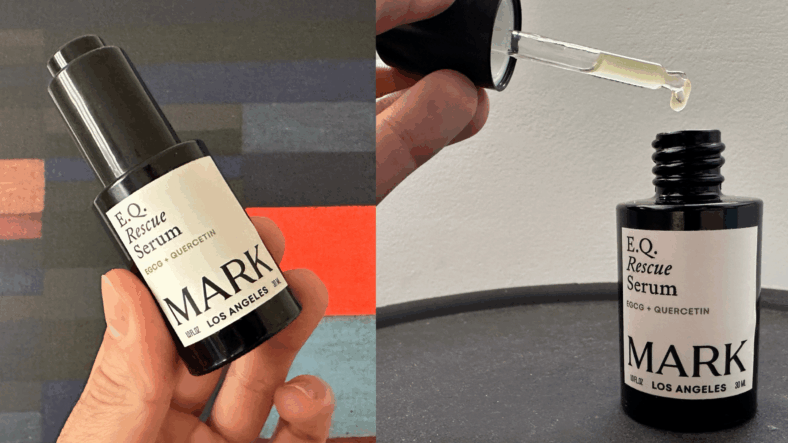
High-dose EGCG and quercetin delivered through XDF™ technology to visibly reduce redness, refine texture and calm breakouts—more targeted than typical antioxidant serums.
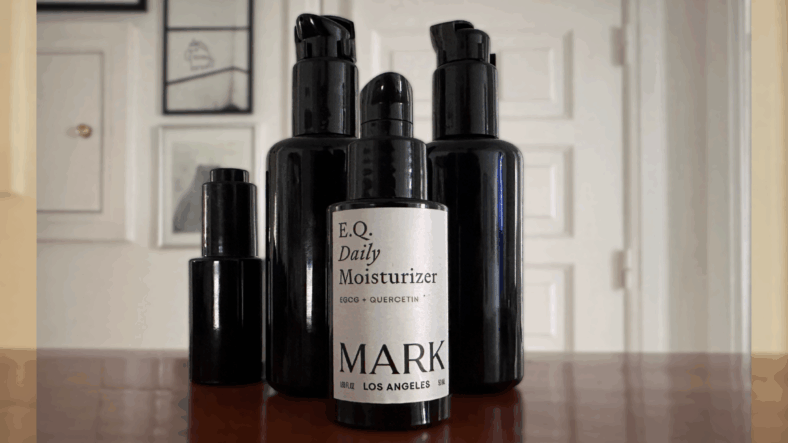
Squalane, jojoba and EGCG-quercetin restore balance, hydration and tone. A lightweight, antioxidant-rich hydrator offering more comfort and clarity than standard daily creams.
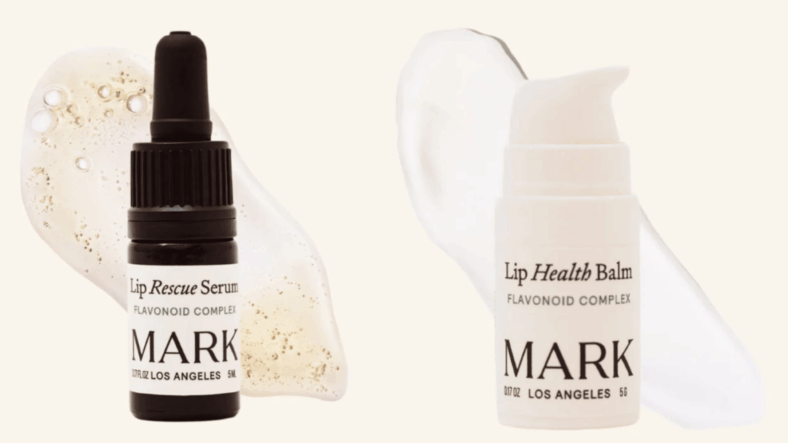
Lip Rescue Serum and Lip Health Balm
A two-part system for both treatment and prevention. Fast acting because lip skin absorbs actives quickly. “You get almost direct access to the inflammatory layer,” says Menning. “That is why results show up fast.”