
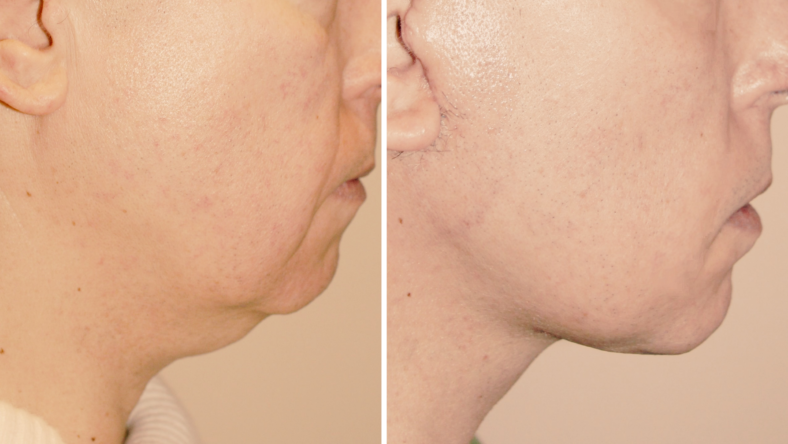
If you’re considering a facelift, then here are the main things you need to understand about latest tech, shopping surgeons, and what to expect.
If your algorithm feels flooded with facelift before-and-afters, and “did he or didn’t he” discourse, that’s not accidental. The procedure has hit an inflection point. Rapid weight loss from GLP-1 drugs, widespread filler fatigue, and sharper surgical outcomes have all collided at once. The result is a category that feels newly visible, and suddenly more relevant to men as the word “longevity” manifests in all kinds of superficial ways.
For the first-ever episode of SPIFFY, my men’s grooming podcast, I interviewed journalist Tatiana Boncompagni (who reports on the aesthetics industry for New York Times, Wall Street Journal, Goop and more), NYC-based facial plastic surgeon Dr. Sam Rizk, and cosmetic dentist Dr. Larry Rosenthal, who also underwent a facelift himself (from Dr. Rizk). The episode is available on Spotify, Apple, YouTube, or wherever you listen to podcasts.
Rizk has anecdotal evidence to color the shift towards facelifts: “It is the number one procedure that I do… it has gotten a lot more popular, particularly since people are losing major amounts of weight, and also people are melting their filler.”
Even a peer of his, facial plastic surgeon Dr. David Rosenberg in NYC, gives me these numbers: “We have seen a remarkable increase in the number of facelifts being performed in our office with a 42% increase in the last two years alone. Additionally, we’ve noticed a trend towards younger patients requesting ‘baby facelifts’ AKA mini procedures in their late 30s. Four years ago the mean facelift was 54 years old and now it’s down to 49.”
So, yeah: Facelifts are more popular than ever—and with men, as much as women.
SMAS vs. Deep Plane Facelifts
The two key types of facelifts to understand are the SMAS and the Deep Plane. (SMAS stands for Superficial Musculoaponeurotic System, a layer of tissue below the skin and fat, but above deeper facial muscles. (Rizk compares these to layers of an onion.) And the SMAS can be manipulated to help reposition the face.
So, a SMAS facelift separates the skin from that layer and adjusts each independently. A deep plane facelift lifts both together, working underneath them as a unit. That difference has consequences for both aesthetics and healing.
“The problem with a SMAS,” Rizk says, “is that you’re separating the skin from the SMAS… It looks pulled, it looks tight. You’re destroying the blood supply to the skin.” By contrast, “the deep plane keeps those two layers attached and it looks more natural.” Still, while he prefers the latter, he says it’s not a one-size-fits-all solution for patients. You need to instead focus on outcomes with your surgeon and figure out which one is better suited to your desired results. So, start that dialogue!
Recent Advancements in Facelift Procedures
Here are some of the things that make facelifts better and better lately.
A Shift Toward Vertical Lifting
Modern facelifts are less about pulling skin and more about repositioning structure. One of the most important shifts is directional. “We are going in good vertical directions,” Rizk says. “The deeper you go, the more natural it looks and the longer it lasts.” Earlier techniques often pulled horizontally, which could distort the eyes and mouth. Vertical lifting better mimics how the face naturally ages and falls.
Faster Recovery and Less Trauma
Advancements are not limited to how the face is lifted. Recovery has improved in parallel. Rizk points to “tissue sealants to reduce bruising, removing drains [which] have made it feasible for patients to recover quickly.” These changes reduce swelling, shorten downtime, and make the overall process more manageable.
Longer-Lasting Results
Durability is now a central focus. Surgeons are refining how tissues are secured so results hold over time. “Using deep sutures that are non-cabling, the tissue becomes close to each other and they last longer,” Rizk says. It is a technical detail, but one that reflects a broader goal: fewer revisions, longer-lasting outcomes.
The Newsletter: Subscribe to Blue Print by Adam Hurly
The best grooming gadgets, new products, gift guides, and game-changing advice—all inside our free newsletter.
You may unsubscribe at any time. By signing up, you agree to the Terms and Conditions, Use Policy, as well as our Privacy and Cookie Policies. You also acknowledge our site Disclaimer.
What Good Results Look Like
Across all three conversations, the standard for success is consistent: the work should be invisible. As a patient, Rosenthal approached his facelift with the same philosophy that guided his decades in cosmetic dentistry. “I’m not a big proponent of the big white cross-the-board look,” he says. “I’d like them to look real.” His goal was not to look different, but to resolve a mismatch. “All this exteriorly did not go with how I felt internally.”
Thus, the best results are not about looking younger in isolation. Instead, they are about cohesion: making the face, eyes, and overall presence feel like they belong together again, and to that specific individual.
How Facelifts For Men are Different Than for Women
Facial harmony is often approached differently between masculine and feminine outcomes. Here are key things that surgeons like Rizk focus on for male patients.
The Male Priority: Jawline and Neck
The focus shifts away from the mid-face and toward structure. For male patients, a clean jaw and neck often define the result. “In men, we’re focusing on vectors that don’t distort the beard,” Rizk says. “The jawline is probably the most important thing, and the mid-face is not as important.”
Surgical Adjustments for Facial Hair
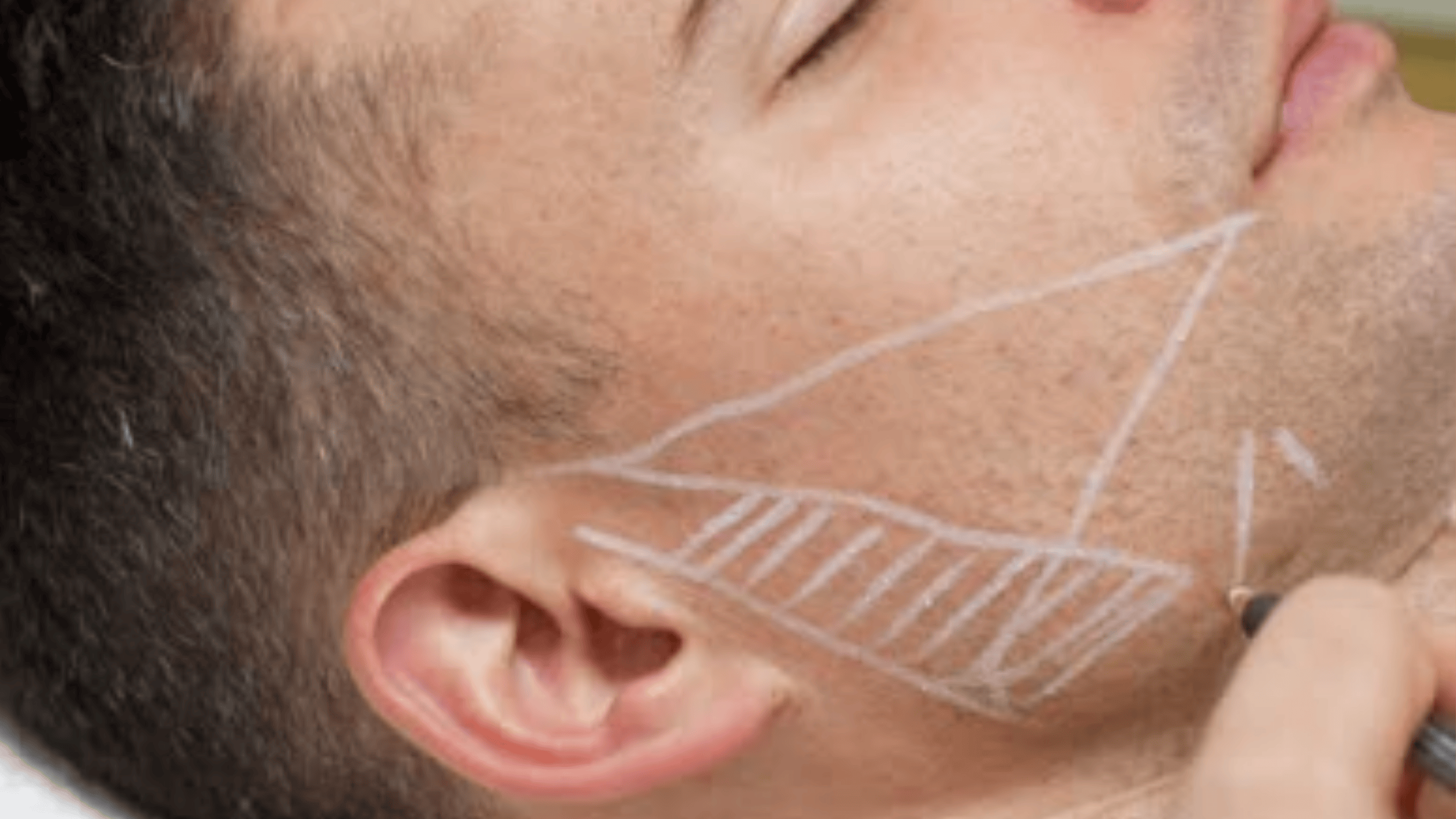
Facial hair introduces additional complexity. So, incisions must be placed carefully to avoid disrupting beard growth patterns. “In men, the incisions are shaped so that they have the least possible distortion of the hairline for beard growth,” Rizk says. This very technical detail directly affects how natural the result will be.
Reframing the Procedure for Male Patients
There is also a psychological difference in how the procedure is discussed. “Don’t think of it like a facelift,” Rizk says. “Think of it like just re-contouring the jawline… cleaning this up” (as he gestures to his neck area). In practice, that reframing helps men engage with the procedure without the baggage attached to the term “facelift.” (Hey, same reason we call men’s perfumes “colognes”, right?)
What Do Facelifts Cost? (In Different Markets, Too)
Pricing for facelifts varies dramatically depending on surgeon reputation and location. “It can cost anywhere from $10,000 in Mexico… all the way up to $300,000,” Boncompagni says. That range reflects both medical tourism and elite, high-demand surgeons in major markets.
Typical Pricing in Major Cities
Within the U.S., there is a more consistent middle tier. “There’s a handful of doctors… charging about $150,000 to $200,000, for high-earning clientele” she says. “But still, really good doctors are in the $70,000 range.” These are experienced surgeons in cities like New York, Los Angeles, Chicago, and Palm Beach.
The Real Budget Most Patients Have
Despite those numbers, patient expectations are lower. “I get calls all the time, people telling me ‘I have $25,000, I have $30,000,’” Boncompagni says. “That is the sweet number: 25-30K.” And for that, avoid the urge to fly abroad simply for a deal (without doing the necessary vetting, and planning your recovery too).
Instead, you might have to get smart about finding the best doctor in your own vicinity, who can do your procedure, without compromising on quality and care.
How to Lower the Cost of Your Facelift Without Compromising on Quality
Tatiana gave me some greatest advice on ways you can negotiate lower costs for this procedure. You can watch the clip here or read below.
1. Target Surgeons Who Are Earlier in Their Careers
There is a viable path to that $20–30K range, but it requires timing. “In order to get somebody who’s doing deep plane work… you are gonna have to go with someone who’s a little bit younger and earlier on in their career,” Boncompagni says. These surgeons often have strong training but have not yet reached peak pricing.
“Every single one of the doctors who is now charging $150,000… five years ago… they all started charging $30,000, $40,000,” she says. Today’s affordable surgeon may be tomorrow’s top-tier name.
2. Do the Work Most People Skip
This is where people mess it up: They rush the decision because it’s overwhelming. You can’t take your first Google and take that person as your designated surgeon. The difference between a good and bad outcome is often just a few more calls and a few more consultations. Boncompagni reinforces that: “You have to put in a little bit of homework.”
3. Use Social Media as Leverage
Tatiana lives in this world—tracking surgeons, patients, outcomes—and notes an implied dynamic: patients who are willing to be visible often have more negotiating power. That can mean being open to sharing your results on social media, allowing before/after usage from the clinic (on site, on socials, in media), and participating in case documentation. Men might especially have an advantage here since far fewer are comfortable being public about their procedure.
Surgeons—especially rising ones—benefit from strong case studies. If you’re a good candidate and willing to be featured, that can influence pricing or access. So, understand that your case has value to them, too.
4. Be Flexible With Timing
If you want a better price with a high-quality surgeon, rigidity works against you. Being flexible can mean: taking last-minute openings, filling slower periods in their schedule, and not insisting on peak dates. So, ask them if they have different prices based on different days of the week, days of the year. Demand ebbs and flows, and they might be willing to slot you in at a lower rate on a day when there isn’t any competition for that surgeon’s valuable time.
The One Add-On That Comes Up Most: Under-Eye Fat Grafting
A facelift doesn’t operate in isolation. If the surrounding features don’t match the new jawline and neck, the result can feel off—even if the lift itself is technically excellent. You can likely ignore the long menu of add-ons that that the clinic will try to sell you, with one key exception.
“You want the eyes and the face to belong together,” he says. “You want the eyes, the forehead and the face and jawline to look like they’re in the same decade.” For men, the most common one he flags is subtle volume restoration under the eyes. In other words: Do consider getting a fat transfer around the eyes.
“Sometimes they need fat grafting around the lower eye when it’s shallow,” he says. “Nano fat or micro fat grafting is a great option in the under-eye area.” This can ensure that the lower face looks refreshed but the eyes still are able to signal some daily fatigue or age. It’ll help you look more natural. At the very least, ask your surgeon about it, aye?
How to Find the Right Facial Plastic Surgeon
First, Prioritize Surgeons Who Do Faces All Day
“You cannot be an occasional facelift surgeon,” Dr. Sam Rizk says. “You have to be in the face every day.” That doesn’t automatically mean you only choose a facial plastic surgeon over a general plastic surgeon, but it does mean you prioritize repetition and specialization. If a surgeon’s practice is split between body work and the occasional facelift, that’s a red flag. You want someone whose hands are trained on this exact procedure, over and over.
Rizk puts it in practical terms: it’s “learned memory.” The consistency you see in results comes from volume.
Study Before-and-Afters (Look for Patterns)
Most people make the same mistake: they see one great result and stop there. Both Rizk and Boncompagni are aligned on this: you’re not evaluating a single case, you’re evaluating a body of work. Be sure to scroll past the first few pinned or “best” cases, looking at multiple patients, different ages, different starting points, and paying attention to consistency.
You’re looking for the same signals every time, like: no overly tight or pulled skin, natural jawline definition, not exaggerated… as well as faces that still look like the person before they went under the knife. If the results feel uneven—or only look good in one or two cases—that tells you more than any credential.
Invest in Consultations (and Expect to Pay for Them)
This is where most people try to save money, but where they shouldn’t. “Don’t let the consultation fee scare you,” Boncompagni says. “I think it’s worth it to pay a few people $500 to really find your surgeon and feel so confident.” Top surgeons often charge for consults, and that’s part of the process.
Start taking notes and comparing how each surgeon evaluates your face, what they recommend (and what they don’t), and how clearly they explain trade-offs. That comparison is what sharpens your decision.
What Does It Feel Like to Get a Facelift?
The expectation, for most people, is that a facelift is a painful, drawn-out recovery. That wasn’t Dr. Larry Rosenthal’s experience. He went into the procedure assuming the worst. What stood out instead was how little discomfort he felt, even after a six-hour surgery.
“The discomfort factor was absolutely unbelievable… they can’t believe I took time at all,” he says. Pain management was minimal. “They gave me half of a pain pill… the next day, but I just took Tylenol. The only major fact of discomfort was I had to keep my head straight. I’m used to sleeping on the side.” In practice, that meant being deliberate about positioning, like sleeping upright, limiting movement, and letting the surgical work settle without disruption.
The rebound timeline was shorter than expected. Rosenthal, a prominent cosmetic dentist, was back to work in about a week and a half, easing in with a lighter schedule. His surgeon had advised closer to two or three weeks, but the overall process, as he describes it, was “uneventful.”
There were, however, unfamiliar sensations along the way. Temporary numbness is part of the process, especially in areas where nerves are affected during surgery. “You’re going to be numb for a while,” he says. “You feel like you won’t ever lose that feeling… but part of it came back very quickly.” Over time, the sensation returned completely. “I don’t even know that I had surgery.”
And really, that’s ultimately the goal: a natural-looking result, yes, but also recovery that fades into the background just as cleanly.