
Reviewed by: Cosmetic Chemist Kelly Dobos, MS MBA
An effective Vitamin C serum doesn’t need to be expensive. Instead, learn which products and formulas are worth your time and money. We even explain variations of this brightening ingredient ( L-Ascorbic Acid vs. derivatives).
Topical Vitamin C is my favorite active skincare ingredient for good reason. It’s a powerhouse antioxidant that protects against environmental damage, plays a crucial role in collagen production, and can brighten your complexion (read: healthy looking skin + minimal discoloration). Your skin can’t produce Vitamin C on its own, making topical application essential for optimal results.
But every rose has its thorns. And in this case, Vitamin C is incredibly finicky.
“The real challenge with Vitamin C is the stability of the molecule,” explains cosmetic chemist Kelly Dobos, who teaches cosmetic science at the University of Cincinnati and has decades of experience formulating for major consumer brands. “It degrades with light, heat, and exposure to oxygen.” On top of that, it breaks down more quickly in water-based formulas.
This instability makes Vitamin C one of the most difficult skincare ingredients to shop for intelligently. You don’t want to buy anything that’s been on the shelves too long, and you don’t necessarily want to cut corners on cost, or you might just be buying lemons. (And while lemons are chock full of Vitamin C… it’s not the kind that’s going to give you the aforementioned benefits.)
I asked Dobos for her chemist’s take on the ingredient, its fickle nature, and how to help customers navigate this complex but effective ingredient. Here’s an explainer on this finicky ingredient, and how to get the most potency out of your Vitamin C products.
WATCH: Learn More About Vitamin C Serums and Innovations
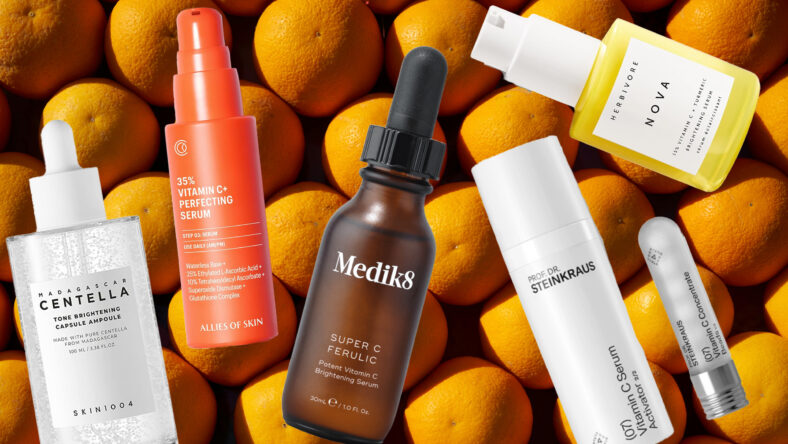
Quick Picks: The Best Vitamin C Serums (According to Blue Print)
- Best High-Grade Vitamin C: Medik8 Super C Ferulic Serum (Amazon / Medik8)
- Best Budget Conscious: The Ordinary Vitamin C Suspension 23% (Amazon / Ulta)
- Guaranteed Freshness: Prof. Dr. Steinkraus Vitamin C (Prof. Dr. Steinkraus / Niche Beauty)
- Best Value: Skin1004 Brightening Capsule Ampoule (Amazon / YesStyle)
- For First Timers and Sensitive Types: Medik8 C-Tetra Serum (Amazon / Medik8)
- Industry Best Seller (A+ Formula): SkinCeuticals C E Ferulic (DermStore / SkinCeuticals)
The Skincare Benefits of Vitamin C
Vitamin C delivers multiple proven benefits for skin health. Here are its core benefits:
- Antioxidant Protection: Vitamin C neutralizes free radicals from environmental stressors.
- Collagen Production: Collagen gives skin its resilience, firmness, and bounce. And Vitamin C is a key molecule in the synthesis of collagen production that enables skin cells to manufacture higher-quality collagen more efficiently.
- Brightening Benefits: Vitamin C inhibits tyrosinase, an enzyme involved in melanin production, helping address hyperpigmentation and helping deliver on that “bright complexion” promise.
- Enhanced Sun Protection: Vitamin C works synergistically with sunscreen for better UV defense thanks to its immediate antioxidant defenses.
Can You Just Consume Vitamin C for These Same Benefits?
No, you can’t just chug a bunch of orange juice and expect the same skin-boosting results. Topical application matters even if you’re getting Vitamin C in your diet. When you ingest Vitamin C, it goes through “first pass metabolism,” meaning some gets degraded before reaching your skin. For this reason, direct topical application delivers benefits more efficiently to where you need them most.
The Newsletter: Subscribe to Blue Print by Adam Hurly
The best grooming gadgets, new products, gift guides, and game-changing advice—all inside our free newsletter. (Plus occasional big-ticket giveaways, too!)
You may unsubscribe at any time. By signing up, you agree to the Terms and Conditions, Use Policy, as well as our Privacy and Cookie Policies. You also acknowledge our site Disclaimer.
Shopping Smart: What to Look For in a Vitamin C Serum (And Avoid)
Here are Dobos’ key parameters for shopping smart. (We’ll get to specific ingredients/formula based stuff later in the article.)
- Packaging is Crucial: “You want packaging that limits exposure of the formula to light, heat, and air,” Dobos says. Look for opaque bottles and airless pump packaging. If it’s in clear packaging, it’s an instant no.
- Color Tells the Story: Fresh Vitamin C should be clear or slightly yellow. If your product has turned orange or brown, it’s oxidized and ineffective.
- Buy From Reputable Sources: “I urge people to buy products from reputable brands because part of the cost of the formula is in the overhead,” Dobos says. This includes the manufacturing, quality control, and quality assurance. These brands are taking the time and care to bring you the right ingredients, a smart formula, and effective packaging—and likely can ensure its freshness / maximum efficacy, too.
Similarly, a discount is probably too good to be true, and not just for shelf stability reasons: “Counterfeiting can run unchecked in online marketplaces known for inexpensive products,” Dobos tells me. “Worse than that ineffective product, I worry about the risks of microbial contamination or use of low quality and sometimes dangerous ingredients.”
- Don’t Stock Up: Unlike other skincare ingredients, Vitamin C degrades over time. Buy as needed rather than hoarding multiple bottles.
Decoding Vitamin C Formulas: Your Ingredient Cheat Sheet
Walk down any skincare aisle and you’ll see “Vitamin C” splashed across dozens of products. But you’ll never see it listed on the ingredients list—because Vitamin C comes in different forms. Some are extremely effective but extremely unstable. There are also more shelf-stable derivatives that satisfy gentler skin types, too. Each form of the ingredient has distinct benefits and limitations.
Understanding these differences is crucial for making smart purchasing decisions and managing your expectations.
Here are the current key “Vitamin C” ingredients of note.
L-Ascorbic Acid (Pure Vitamin C): The Gold Standard for Efficacy
L-ascorbic acid is atop the Vitamin C pyramid in terms of its performance, and delivering on the above benefits we discussed. That said, it’s not all smooth sailing. Here are some key things to know about the ingredient (which can also be among the most expensive forms in top-shelf products, too).
- Potency: Maximum effectiveness for antioxidant + skin firming + brightening benefits
- Stability: Poor (degrades quickly in water)
- Penetration: Requires low pH to work
- Best for: Maximum results if you can handle potential irritation
Dobos emphasizes that the concentration matters, too: “You really need ascorbic acid at greater than 5% for it to be effective in the skin.” Most reputable brands will clearly list this concentration percentage.
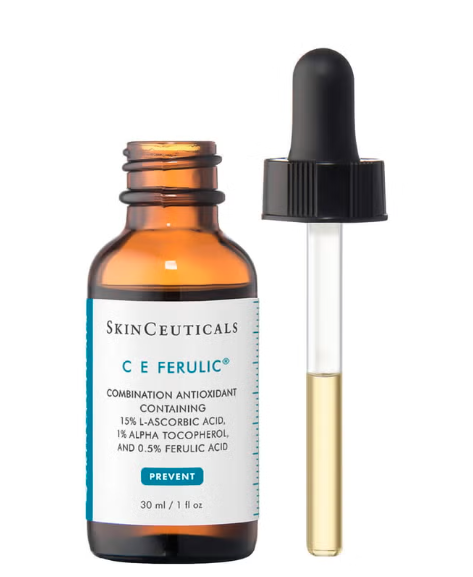
SkinCeuticals is the longstanding gold standard here, but their patented formula just expired (see below), so watch out for more C + E + ferulic acid formulas soon. Many powder formulas like Prof. Dr. Steinkraus also utilize L-Ascorbic acid.
Why L-Ascorbic Acid + Ferulic Acid + Vitamin E is the Ultimate Combination
You will often see L-ascorbic acid in formulas with Vitamin E and ferulic acid, too. It’s widely known that these two ingredients can help stabilize the otherwise volatile L-ascorbic acid.
Ferulic Acid: Dobos explains that ferulic acid acts as a “sacrificial antioxidant” for L-ascorbic acid. When pure Vitamin C loses an electron (its mechanism of antioxidant action), ferulic acid donates one back to help stabilize it and prevent further degradation.
Vitamin E (likely as tocopherol): This creates the perfect complement, says Dobos, because “combinations of antioxidants always work better together” when it comes to antioxidants. “Since L-ascorbic acid is water-soluble and vitamin E is oil-soluble, you get an additive effect, in that they provide protection in both water and oil environments rather than competing for the same space.” Think of it like having security guards covering both the front door and back door of your skin; they’re protecting different areas but working toward the same goal.
Vitamin C Derivatives
Since L-ascorbic acid has some serious peaks and valleys when it comes to efficacy vs. stability, there are a number of derivatives to consider too. These are often more shelf stable, more budget friendly, and often more sensitive-skin friendly also.
The most common derivatives you’ll see on ingredients lists: Ascorbyl palmitate, magnesium ascorbyl phosphate, tetrahexyldecyl ascorbate, 3-O-ethyl ascorbic acid.
How do they work? “The derivatives may be able to penetrate the skin more easily, but once they penetrate, they need to be converted to ascorbic acid to be effective,” explains Dobos. “That’s the limitation—they have lower efficacy since they don’t arrive as ascorbic acid.”
- Ascorbyl Palmitate: Oil-soluble derivative that penetrates well but requires conversion to active Vitamin C.
- Magnesium Ascorbyl Phosphate: Water-soluble, most gentle option ideal for sensitive or reactive skin types.
- Tetrahexyldecyl Ascorbate: Premium oil-soluble form offering superior stability and deeper skin penetration. As seen in Medik8 C-Tetra and Herbivore Nova 15% Vitamin C + Turmeric Brightening Serum.
- 3-O-Ethyl Ascorbic Acid: Highly stable derivative excelling at brightening and melanin inhibition effects. As seen in Medik8 Super C Ferulic and Skin1004 Brightening Capsule Ampoule
Key Vitamin C Consideration for Consumers
If you want guaranteed maximum results and don’t mind investing in proper formulation, choose L-ascorbic acid. If you’re budget-conscious or have sensitive skin, derivatives offer a better entry point in one or form of those categories.
The Next Frontier: Solving the Vitamin C Stability Problem
Since pure L-ascorbic acid is so unstable, innovative brands are developing clever delivery systems that preserve potency while delivering maximum benefits. Here are three key ways that Vitamin C preservation is being innovated.
Encapsulation Technology
Many formulas have the ingredient protected in tiny encapsulated pods—often microscopic. In addition to shelf stability benefits, think of encapsulation as time-release capsules for your skin. The Vitamin C stays protected from degradation until it reaches your skin, then releases gradually throughout the day.
“This sustained release is particularly beneficial since you’re experiencing environmental assaults all day,” says Dobos, meaning your skin needs continuous antioxidant protection rather than just one morning dose.
Korean brands like Medicube and Skin1004 also utilize encapsulation technology in their innovative cream-capsule and bead formats.
Powder Systems
Whether it’s individual daily packets or mix-at-home systems, powder formulations eliminate stability concerns entirely while delivering pure L-ascorbic acid. “Vitamin C in its pure form is crystalline, so you are getting that fresh dose of ascorbic acid,” says Dobos.
Typically, you will apply an activator serum to the powder on a daily basis (as seen in Prof. Dr. Steinkraus’ offering). Or you will mix the powder and serum together upon purchase, like with Drunk Elephant’s.
Waterless Formulations
Since water is Vitamin C’s primary enemy, removing it entirely eliminates the main cause of degradation. These anhydrous formulas can deliver higher concentrations of stable Vitamin C than traditional water-based serums.
Allies of Skin has two waterless concentrations (20% for more sensitive skin and 35% for maximum potency), both delivering terrific results—albeit at a steep price. The Ordinary has a good budget-friendly waterless option, and BeautyStat has a cult-favorite (and editor-favorite) formula. Which brings us to…
Vitamin C Recommendations at Every Budget
While it’s easy for me to say “invest money in a Vitamin C serum” given the many uncertain variables in play… the truth is there are terrific cost-friendly alternatives, too. The elegance of application may differ, and the ingredients/formulas may impact that final price; still, I genuinely believe this is an imperative ingredient to have in your regimen… so please consider the below and find which one is best for your budget and goals.
We’ll frame things based on efficacy and ingredients, and provide a low-, medium-, and high-price option in each.
But first, my absolute favorite Vitamin C serum…
The Best Vitamin C Serums (According to Blue Print)
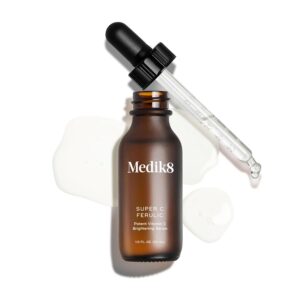
Best High-Grade Vitamin C: Medik8 Super C Ferulic Serum
This powerhouse mirrors the gold standard Vitamin C formula with 30% ethylated L-ascorbic acid (3-O-Ethyl Ascorbic Acid), ferulic acid, and vitamin E at a more accessible price point. Clinically proven and extremely effective for experienced users, but definitely not recommended for sensitive skin types.
Best Budget Conscious: The Ordinary Vitamin C Suspension 23%
Dobos recommends this personally: “It is not a water-based formula, which is good for stability,” though she notes the texture isn’t ideal. “I had to use it sparingly because it does feel oily on the skin.” Worth the compromise for the price.
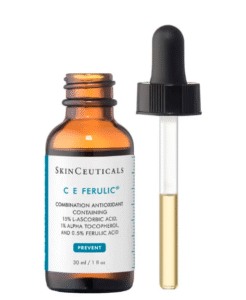
Industry Favorite: SkinCeuticals C E Ferulic
Get It: DermStore / SkinCeuticals
The original and still the industry darling. Hopefully since its patent has ended, we will see more competitors in the space and you won’t have to spend so much. “If you’re really looking to ensure that you’ve got a stable product, that’s the one to go with because we have the most research and data behind it,” says Dobos.
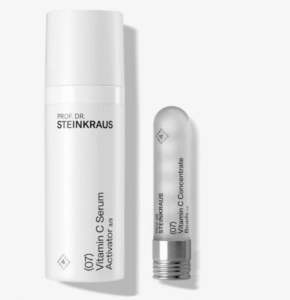
Guaranteed Freshness: Prof. Dr. Steinkraus Vitamin C
Get It: Prof. Dr. Steinkraus / Niche Beauty
My other go-to on this list, for its individual daily powder doses. These eliminate all stability concerns while delivering pure L-ascorbic acid. It starts as a 78% L-ascorbic acid in that crystallized form, then converts to 15% with the activator serum that is applied.
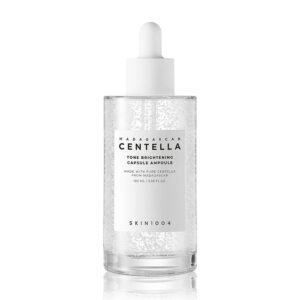
Best Value: Skin1004 Madagascar Centella Tone Brightening Capsule Ampoule
Budget-friendly encapsulated formula featuring 3-O-ethyl ascorbic acid with 77% centella extract provides effective brightening and soothing benefits without breaking the bank. Low pricepoint, extremely high stability (so much so that they use a clear glass), and high volume for long-term usage.
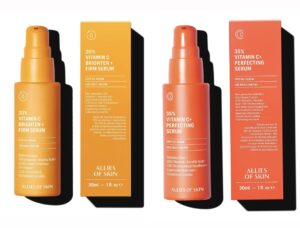
Waterless Finesse: Allies of Skin Vitamin C 20% Serum and 35% Serum
Get 20% Vitamin C: Amazon / Allies of Skin
Get 35% Vitamin C: Amazon / Allies of Skin
These two anhydrous formulas solve the primary degradation issue while maintaining high potency. Get 20% for gentler wear, 35% if your skin is tuff enough.
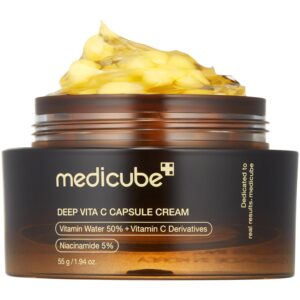
Budget-Friendly Encapsulation: Medicube Deep Vita C Capsule Cream
Not a serum, but a gel cream. Individual capsules break open for each use, ensuring fresh Vitamin C delivery with sustained release benefits. Scoop ‘em out with the included spatula. (Looks super cool too, like the inside of a pomegranate.)
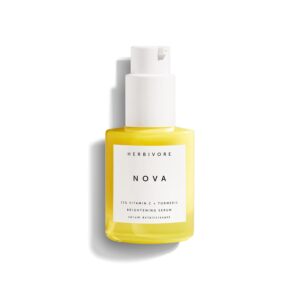
High-Potency: Herbivore Nova 15% Vitamin C + Turmeric Brightening Serum
Contains 15% tetrahexyldecyl ascorbate (THD), the most stable and penetrating Vitamin C derivative, enhanced with skin-calming turmeric for powerful yet gentle results.
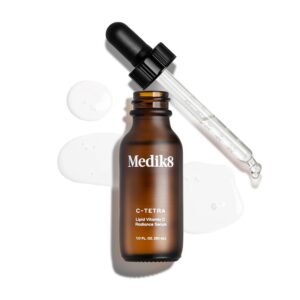
For First Timers and Sensitive Types: Medik8 C-Tetra Serum
Uses 7% tetrahexyldecyl ascorbate (THD) in a cult-favorite formula that’s gentle enough for sensitive skin yet effective enough to show visible brightening results in the span of one week.
Vitamin C Serum FAQs
How to Apply Vitamin C for Maximum Returns
Use Vitamin C in the morning under your moisturizer and sunscreen—but seriously, don’t forget the SPF. “The combination of sunscreen and an antioxidant is really beneficial in protecting your skin from UV damage,” says Dobos.
Since Vitamin C products are often formulated at low pH for better penetration, they can cause irritation when combined with other acids or retinoids (vitamin A). So, keep Vitamin C for morning, retinoids for night.
Why Vitamin C Works Best in Serums (And Not Everything Else)
You’ll find Vitamin C marketed in everything from cleansers to body lotions to daytime moisturizers. But don’t take the bait. “A cleanser is not where I would be getting my Vitamin C,” says Dobos bluntly. “You’re not going to be getting a huge amount of benefit out of a rinse-off product.”
The same logic applies to body creams and other diluted formulations. Serums and select creams will concentrate higher percentages of Vitamin C in targeted facial applications, so that the ingredient can actually penetrate and deliver results. (Also, serums in their lightweight state tend to penetrate best anyway.)
When Vitamin C is spread thin across large surface areas or washed down the drain, you’re essentially paying premium prices for minimal benefit.
Overall Vitamin C Skincare Advice: Shop Smart, and Make It a Habit
Vitamin C is one skincare investment where quality genuinely matters. Results take time—think months, not days—and proper formulation makes the difference between an effective product and expensive disappointment. While derivatives offer gentler alternatives, L-ascorbic acid remains the gold standard for maximum benefits.
Choose based on your priorities: if you want guaranteed potency and can invest properly, go with stabilized L-ascorbic acid formulations. If budget is a concern, innovative delivery systems like powders or waterless formulas offer smart compromises. Just remember Dobos’s key insight: “You can put as much Vitamin C as you want in a product, but if it’s not stable, how efficacious can it really be?”