
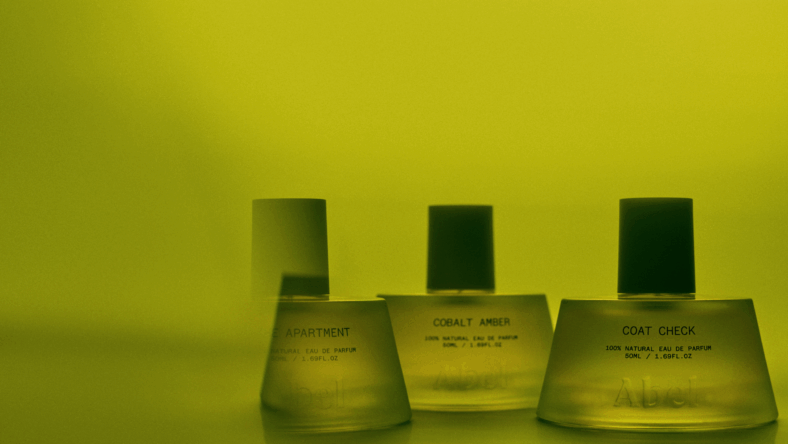
Abel founder Frances Shoemack on fighting the good fight in perfumery, and leading her ever-evolving brand through a recent redesign.
“Our sense of smell has a direct neural pathway to the subconscious—the primal, reptilian brain that feels and responds emotionally before actually processing information,” says Frances Shoemack, founder of the New Zealand–based natural fragrance brand Abel. “That’s why you might smell something, suddenly think of a person, and only afterward realize what triggered it.”
Shoemack launched Abel back in 2013 with the goal of creating distinctive, contemporary scents using only 100% natural ingredients. Natural can mean a lot of things, and each brand likes to interpret their aims differently. Abel’s aim is to eliminate the use of fossil fuel-derived petrochemicals that are frequently used in perfumery. She says that an estimated 95% of molecules currently used are derived from these petrochemicals.
Shoemack’s background in winemaking helps influence her perspective on perfumery: “Imagine if the Bordeaux houses were adding sugars or flavors to their wine. That just seemed insane to me,” she says, drawing a parallel to the synthetics used in most Eaus today.
And now, 12 years into Abel’s run, her vision takes on a redesign, with new packaging, nomenclature, and performance. The fragrances are reformulated for longevity while keeping their all-natural promise. The packaging follows suit with a pioneering sustainable system: glass bottles made from post-consumer recycled glass, biodegradable caps, and mono-material outer boxes crafted entirely from recycled materials.
I recently sat down for a pleasurable yet lengthy conversation with Frances about her relaunch, discussing the parallels between her journey from wine to fragrance, the valuable lesson she learned from her very first scent, and why she’s now focused on refining her existing creations rather than expanding the line.
A quick aside, too: One of my favorite scents from the brand is Coat Check, formerly known as Black Anise. It’s a penetrating, tobacco-heavy fragrance that feels like brushing shoulders with liquors and smoked-out conversations during the roaring twenties.
You can shop the entire Abel line here.
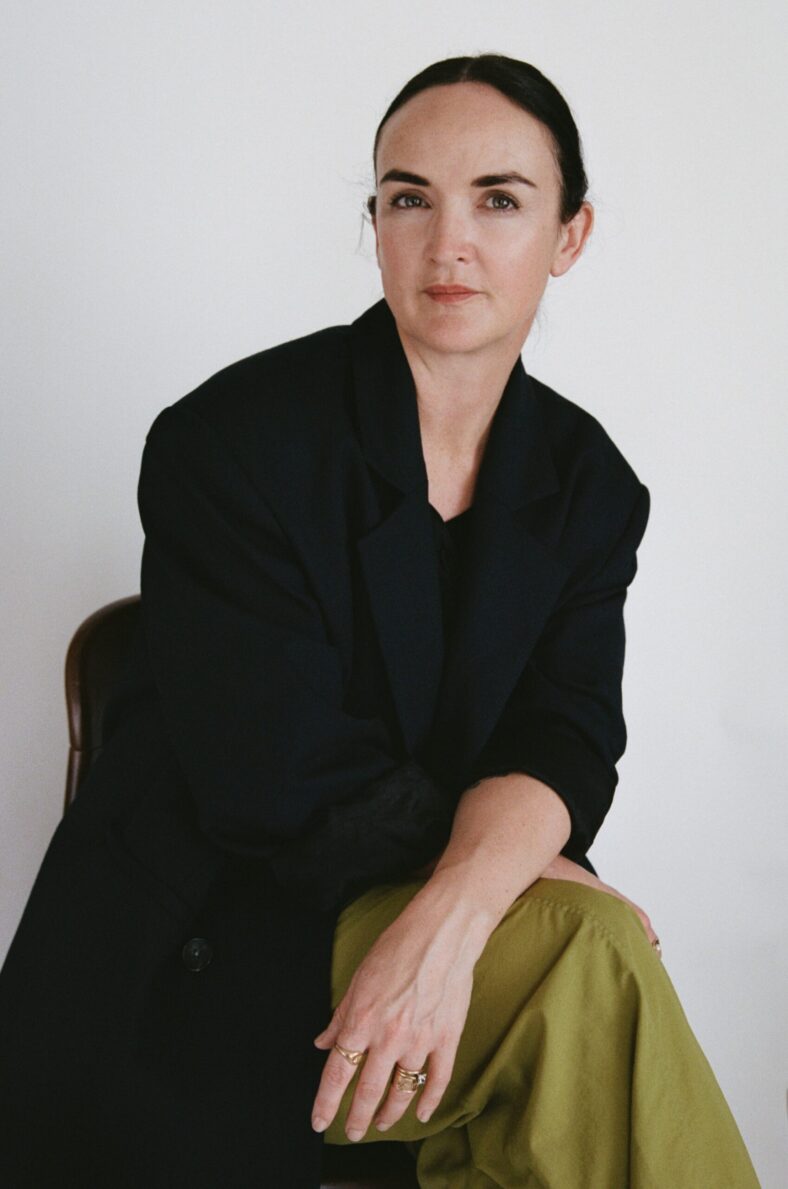
Q&A with Frances Shoemack, Founder of Abel
Blue Print / Leon Hedgpeth: Can you share a bit about your wine background and how that eventually led you into the fragrance world? Do you see any parallels between the two?
Frances Shoemack: Straight from high school, I studied viticulture and enology at university. What drew me to wine is the same thing that drew me to fragrance: that intersection of art, science, and nature. Both are creative practices that rely on balancing the technical with the artistic.
With both perfume and wine, there’s the sensorial element and the emotional triggers tied to smell. Our sense of smell has a direct neural pathway to the subconscious, the part of the brain that responds emotionally before processing information. That’s why you might smell something, think of a person, and only afterwards realize what triggered it.
Both industries have deep French and Italian roots. They’re luxuries; you don’t have to drink wine or wear fragrance, but we do because they bring joy and beauty to life. The more you learn, the more you want to learn. That’s what keeps me fascinated: there’s endless depth and complexity in both worlds.
What was the very first fragrance that officially launched Abel?
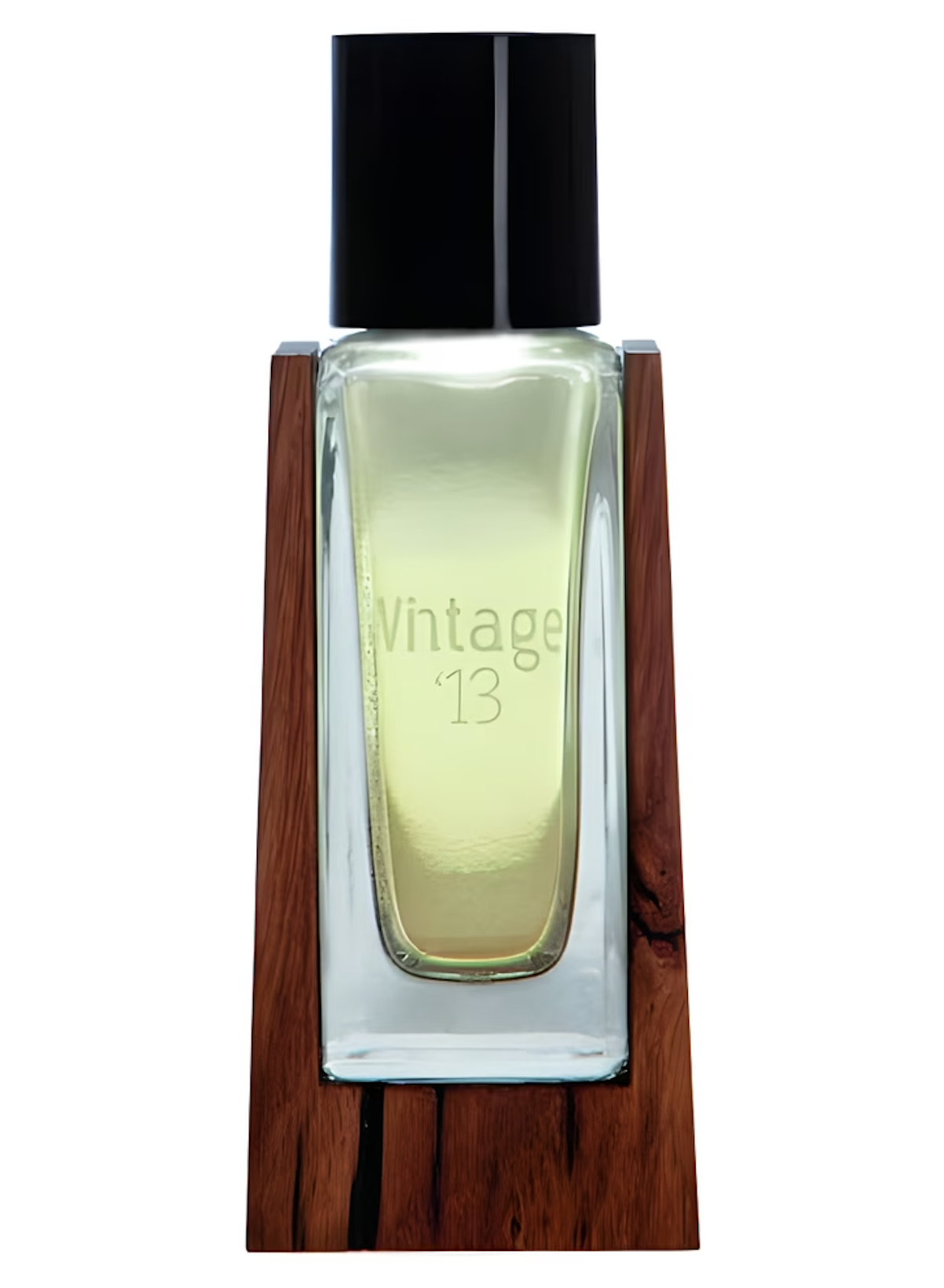
It was called Vintage 13. In those first days, wine was what I knew, so naturally the way we created our first perfume came from that perspective. We called it Vintage 13 because it was released in 2013. The plan was to release a new vintage each year. Totally naive to the commercial realities, but I thought it was cool.
It was a sandalwood fragrance and it was beautiful. I actually put some on recently while we were clearing the stockroom, and it still smells incredible.
Since the brand’s inception, you’ve only used 100% natural ingredients. Why was that commitment important from the start?
Vintage 13 was made only with organically certified ingredients. I was incredibly purist, a classic idealist. But I quickly realized we’d only ever be able to make one or two perfumes because there are so few organically certified ingredients.
So we shifted. It was always going to be no petrochemicals; I didn’t want to be part of that supply chain. Something so beautiful and sensory shouldn’t come from a plastic manufacturing process. Coming from wine, it felt like—imagine if Bordeaux houses were adding sugars or flavors to their wine. That just seemed insane to me.
Someone could say, “We add this molecule because it gives more depth,” but in my world, depth comes from the barrel and the soil. That’s the tradition I came from, and I never questioned it.
Why did you decide to rebrand Abel after more than a decade?
It’s been in the pipeline for at least three years. I would’ve done it earlier, but you have to reach a certain scale and be able to take the risk. It’s quite a risky maneuver, and we probably did it at the earliest opportunity when we felt confident we could pull it off.
Will the rebrand involve reformulations or new branding?
The formulas were a big driver, just knowing that we could. When I first started, biotech in perfumery wasn’t even being discussed. That’s only really happened in the last six or seven years, and we’ve adopted it as soon as it came on board.
Since we committed to natural ingredients, we’ve had to find solutions. I think we’ve adopted biotech faster than any other brand. Each new perfume gets better, technically longer-lasting and higher-performing. I don’t want us compared only within the natural niche. If you’re really trying to change something environmentally, you have to perform alongside the norm. You can’t be “good, but with compromises.”
That’s what we’re aiming for: natural ingredients, beautiful and complex scents, and performance equal to anything else you’d wear.
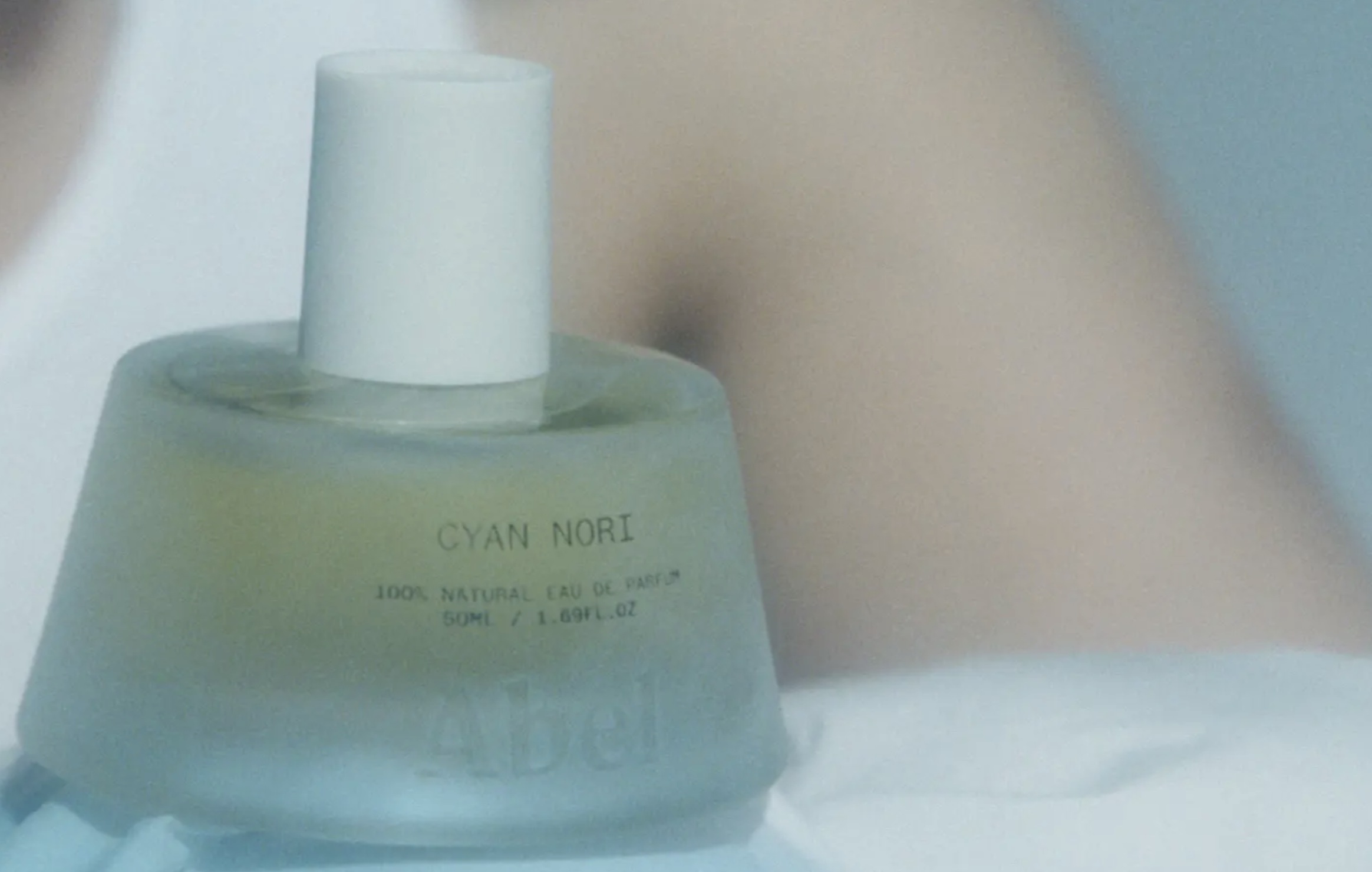
Cyan Nori is one of your best-sellers. Why do you think customers are so drawn to it?
When we launched it in 2020, [our perfumer] Isaac Sinclair was living in São Paulo, so we created it virtually. Creating fragrance over Zoom is not ideal, but the creative direction was so strong it came together easily.
We were talking about how hard it is to do ocean fragrances using natural ingredients, and he said, “Someone just put a seaweed absolute on my desk.” As we spoke, the sun was setting, the sky was blue and tangerine, and I said, “What if we make this effervescent, salty burst that feels like floating in the ocean at sunset?”
When I smelled the sample, I thought, holy shit, this is really cool. We launched it during COVID, and at first people weren’t sure. But within six to nine months, it really connected. It became our first scent to resonate across the U.S., Asia, and Europe.
What does the next 10 years look like for Abel?
I want to [continually] help move away from fragrances produced from fossil fuels and instead use low-footprint, biotech-driven ways of developing perfume. I want us to lead that shift.
As a brand, I want us to stay singular. We’re a fragrance brand; I don’t want us distracted by other categories. We’ve got more perfumes coming, and more ways of delivering them. It’s about exploring new ways to interact with scent and how we can bring that experience to people in the most engaging way.
Editor’s Note: We highly recommend a listen to Smell Ya Later podcast’s interview with Abel perfumer Isaac Sinclair.
The Newsletter: Subscribe to Blue Print by Adam Hurly
The best grooming gadgets, new products, gift guides, and game-changing advice—all inside our free newsletter. (Plus occasional big-ticket giveaways, too!)
You may unsubscribe at any time. By signing up, you agree to the Terms and Conditions, Use Policy, as well as our Privacy and Cookie Policies. You also acknowledge our site Disclaimer.